5–6 Day Kilimanjaro
Marangu Route
The Classic Route
Kilimanjaro's Most Accessible Summit Route
Known as the "Coca-Cola Route," the Marangu Route is Kilimanjaro's oldest and most established path to Uhuru Peak. Unlike every other route, Marangu offers comfortable hut accommodation rather than camping — making it ideal for climbers who prefer a dry, warm base at the end of each day. The route approaches from the south-east through beautiful rainforest, moorland and alpine desert before the final summit push.
We offer Marangu in both 5 days and 6 days. The 6-day version adds a full acclimatisation day at Horombo Hut that significantly improves your summit chances. For fit climbers with previous high-altitude experience, 5 days is viable. For most people, we recommend 6. Our KPAP-certified guides, pulse oximetry monitoring and chef-prepared meals give you every advantage on either option.
5-Day Marangu
- Standard route duration
- Mandara → Horombo → Kibo → Summit
- Suitable for experienced high-altitude trekkers
- Lower cost option
- Good summit success with right preparation
6-Day Marangu ✓ Recommended
- Extra acclimatisation night at Horombo
- Optional hike to Zebra Rocks (3,900m)
- Significantly higher summit success rate
- Best for first-time Kili climbers
- More relaxed, enjoyable experience overall
Hut Accommodation
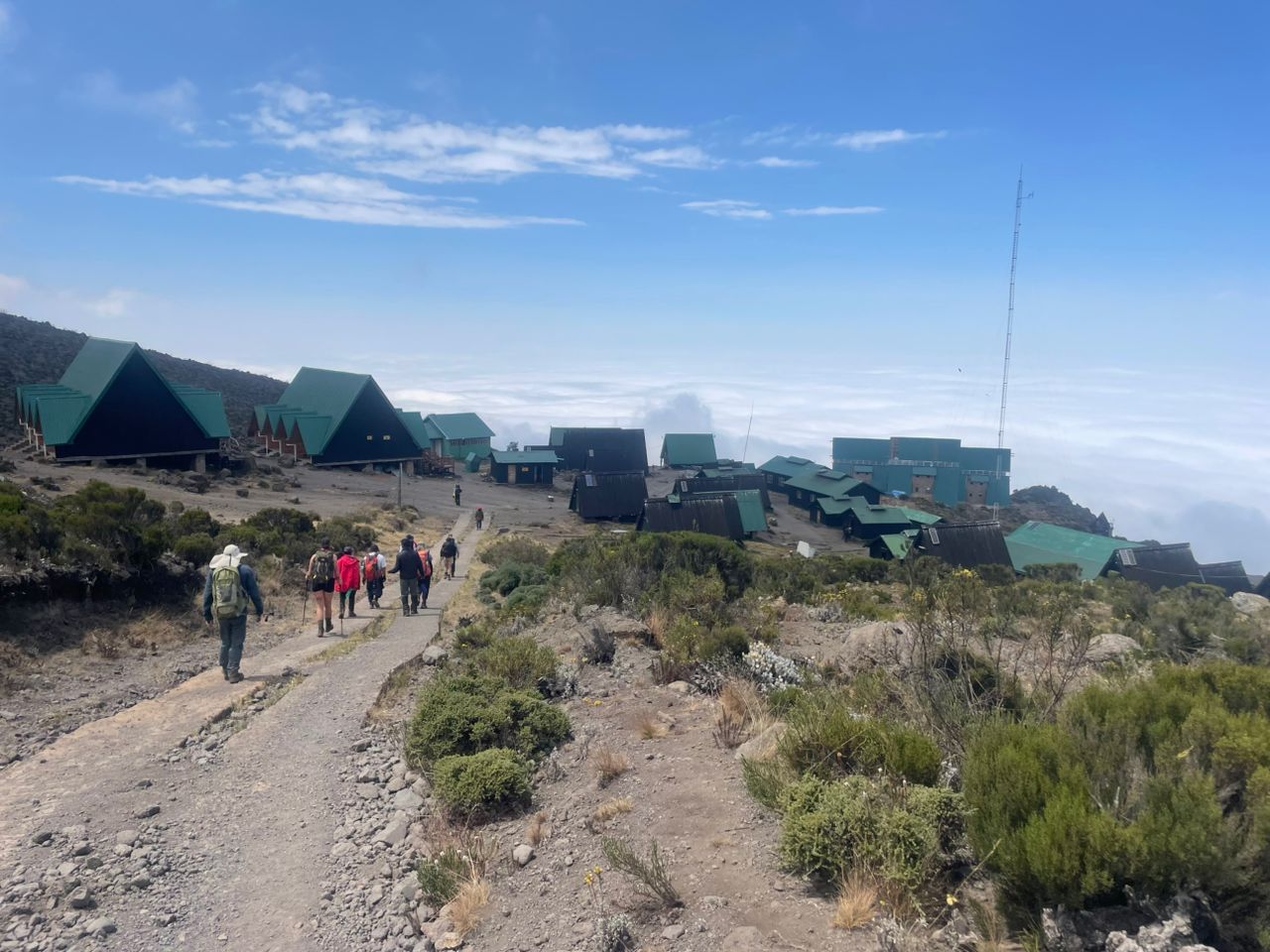
The only Kilimanjaro route with sleeping huts. Mandara, Horombo and Kibo huts provide warmth and dryness that camping routes cannot — a major comfort advantage.
Forest to Summit
Walk through some of Kilimanjaro's most beautiful rainforest — alive with colobus monkeys, exotic birds and giant tree ferns — before ascending through heather and alpine desert.
Proven Path to Uhuru
Our 6-day version includes an extra night at Horombo for acclimatisation — the key difference that significantly boosts your summit success rate over the standard 5-day option.
Elevation Profile — 6 Days
We drive from Moshi to Marangu Gate (1,980m) and complete registration before entering the mountain. The trail leads through dense, beautiful montane rainforest — rich with bird life and colobus monkeys — on a well-maintained path to the first hut. Mandara Hut (2,720m) is a charming cluster of A-frame wooden huts with bunk beds, dining area and flush toilets. An optional 30-minute detour to the Maundi Crater is highly recommended at sunset.
The forest thins and gives way to open moorland with spectacular views of Kibo and Mawenzi peaks. The giant lobelias and groundsels become more dramatic as we ascend. Horombo Hut (3,720m) is the largest of the three hut camps, with dormitory-style accommodation, a large dining hut and extraordinary panoramic views — one of the finest settings on the mountain.
This extra acclimatisation day is what separates our 6-day trip from the standard 5-day option — and what dramatically improves your summit success rate. We spend the morning resting, then take an optional afternoon hike to the famous Zebra Rocks (3,900m) — striped volcanic formations with stunning views of both Kibo and Mawenzi. We return to Horombo for the night. Eat well, hydrate well, move slowly.
Leaving the moorland behind, we enter the eerie lunar landscape of the alpine desert. The saddle between Kibo and Mawenzi opens up with vast, exposed views in every direction. Kibo Hut (4,703m) is a stone dormitory building — basic but functional. This afternoon you should rest, eat a light meal, and prepare your summit kit carefully. The summit attempt begins around midnight.
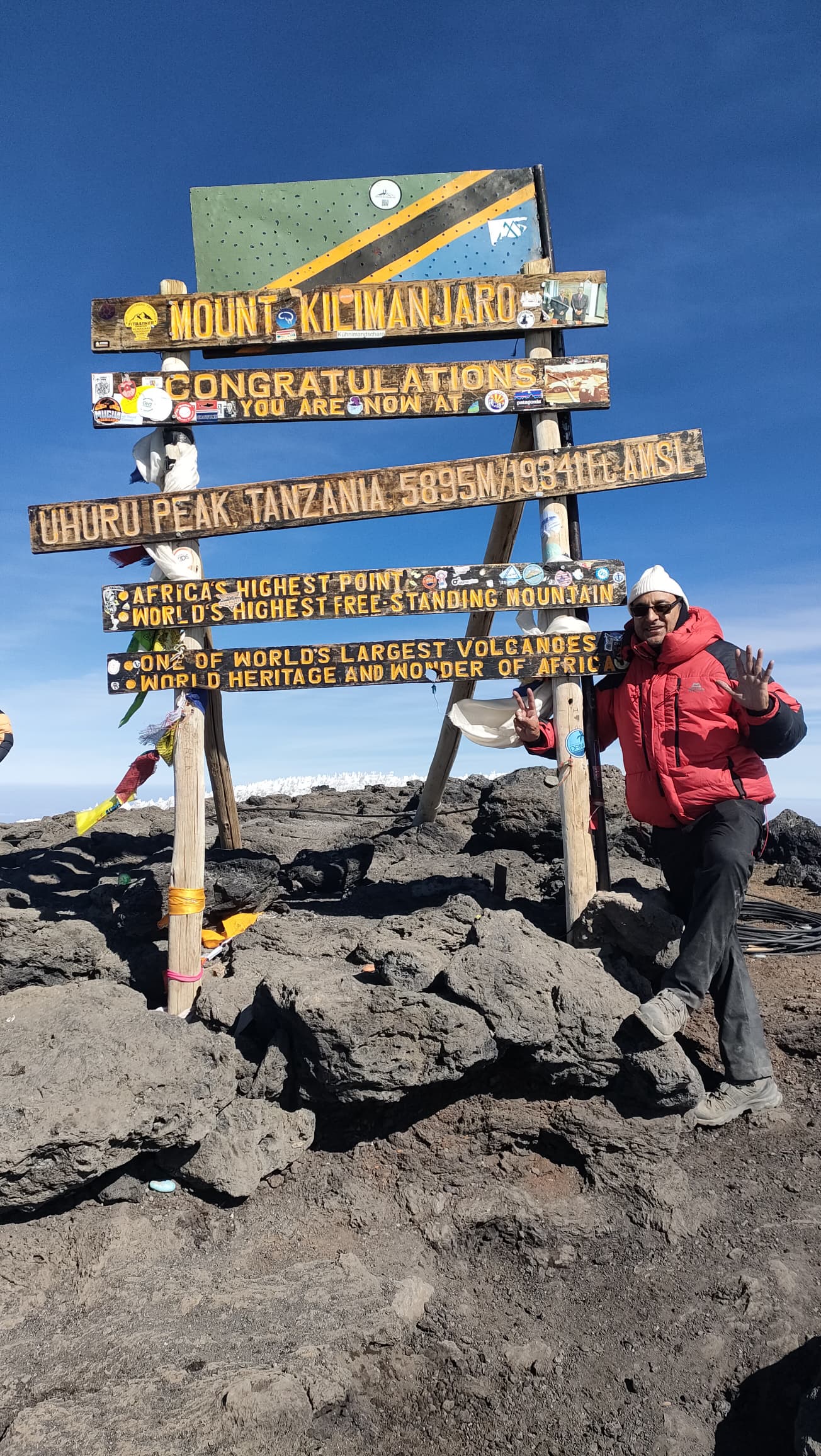
Midnight departure by headtorch into the cold and dark. The final push climbs steep volcanic scree — the William's Point zigzags — to Gilman's Point on the crater rim (5,681m). From there a further 1.5-hour traverse along the crater rim leads to Uhuru Peak (5,895m) — the highest point in Africa. The sunrise from the summit is simply unforgettable. We then descend all the way back through Kibo Hut to Horombo Hut for the night.
After breakfast we descend the full length of the Marangu Route back through the moorland and rainforest to the gate. Your Kilimanjaro summit certificate is presented at the gate office. Fond farewells to your porter team, then transfer back to your hotel in Moshi for a hot shower and a very well-deserved celebratory meal.
- All park entry fees, camping and hut fees
- Professional KPAP-certified guide
- All porters and support staff
- Hut accommodation (Mandara, Horombo, Kibo)
- All meals from Day 1 lunch to Day 6 lunch
- Hot drinks throughout the trek
- Pulse oximetry altitude monitoring
- Emergency oxygen cylinder
- Hotel transfers from/to Moshi
- Kilimanjaro summit certificate
- All Tanzanian government taxes
- International flights and visa
- Travel insurance (required — must cover high altitude)
- Personal hiking gear (boots, sleeping bag, poles)
- Hotel accommodation before / after climb
- Tips for guides and porters
- Alcoholic beverages and personal snacks
- Altitude medication (consult your doctor)
5 or 6 Days?
The 6-day option is what we recommend for the majority of climbers. The extra night at Horombo gives your body a crucial 24 hours to adapt to altitude — the single biggest factor in reaching Uhuru Peak. For fit trekkers with proven high-altitude experience, the 5-day route is a valid option and still achieves strong summit rates. Not sure which suits you? Tell us about your fitness and experience and we'll advise honestly.
Best Seasons
The Marangu Route is climbable year-round. The driest and clearest conditions are January–March and June–October. The long rains (April–May) and short rains (November) can be managed with proper waterproof gear and experienced guides.
Essential Gear
- ›Waterproof hiking boots (well broken-in)
- ›Sleeping bag rated to -15°C (huts are cold)
- ›Warm layers — fleece, thermals, down jacket
- ›Waterproof jacket and trousers
- ›Warm hat, balaclava, gloves
- ›Trekking poles (optional but helpful)
- ›Headlamp with spare batteries
Best RouteKilimanjaro Lemosho Route — 7 Days
ScenicKilimanjaro Machame Route — 6–7 Days
 Top Seller
Tanzania Big Five — 5-Day Safari
Uhuru Awaits
Ready to Climb Kilimanjaro?
Send us your dates and we'll have your personalised quote within 24 hours. No pressure, no hidden costs — just honest advice from guides born at the foot of this mountain.